welcome
|
|||||||||||||||||||||||||||||||||||||||||||||||||||||||||||||||||||||||||
The Case For Killing GRANNY
"Do you still think there's no Eugenics Agenda?..."
The Case For Killing Granny
Bioethics and the New Eugenics The Corbett Report Official LBRY Channel | March 5th, 2021 SHOW NOTES AND MP3: https://www.corbettreport.com/?p=39860
"Do you still think there's no eugenics agenda?..."
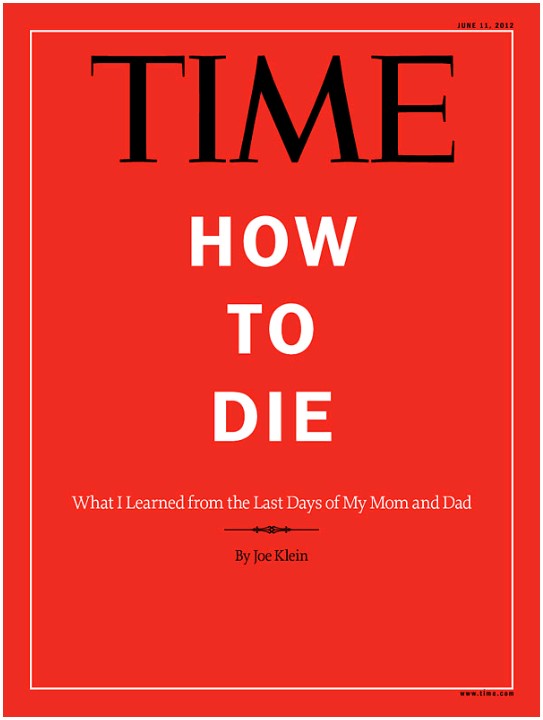
The Health Ranger discusses the new TIME Magazine issue entitled, "How to Die!" which promotes death panels, killing the elderly to save money (and earn bonuses!), and even yanking feeding tubes out of the mouths of your own dying parents!
Get more info here: Depopulation Agenda | Eugenicist Bill Gates
Right-to-Die, Death Panels, Neo-Eugenics and
The bar keeps getting raised on "the right to die" versus the right of the system to convince people their lives are worth little in the face of artificial scarcity otherwise known as "finite resources" as Bill Gates calls them. Now we've moved to a place where bioethicists are arguing it should be legal to kill live, otherwise healthy children after they are born and courts have allowed a mother to starve her disabled 12-year-old daughter to death. But you see, the whole system and everything it's made of is completely made up. Fake boundaries within an evil system. It's a false debate centered around a false reality. They are attempting to put a price tag on the value of your life through the lens of their ridiculous bureaucracy and a society built on industrial complexes that live, breathe and feed on human suffering. The Obamacare architect says we should only live to 75, that it shouldn't be our choice. Unofficial death panels absolutely exist. It's a Soylent Green society in its infancy. They act like spending the dough to give your grandma a few extra months to live at the end is simply too expensive and too much of a drain on their system, but they have no qualms about going $17 trillion dollars into debt fighting endless wars and all the rest of the wasteful, stupid nonsense our government is involved in day after day. Behind it all at the top of the pyramid, the important life-saving, life-extending technologies continues to be suppressed from general public view as they have been for decades now. The whole thing is a bullshit sham, and when you hear what elitist billionaires like Bill Gates have to say about who should be allowed to get what treatment and that we should be "careful about whether you want to make those innovations available to everyone," and then you realize those rules don't apply to him and his family only you and yours, you'll understand why this entire thing is just new eugenics with a trendy technocratic overlay. Meet the new boss, same as the old boss... This isn't about someone's right to take or end their own life. This is about everyone's right to live in a world where that decision isn't made by government bureaucracies or elitist, eugenicist billionaires who would never make that same choice for themselves that they can so nonchalantly make for everyone else. When we devalue one person's life, we devalue all our lives. Bill Gates' Rolling Stone interview from March 2014 (there's a lot more ridiculous, creepy stuff going on in there if you want to read the whole thing): http://www.rollingstone.com/culture/n... Website: TruthstreamMedia.com LINKS: Genocide by The House of Windsor Transhumanism And The Technocratic Era
Bill
Gates
| |||||||||||||||||||||||||||||||||||||||||||||||||||||||||||||||||||||||||



Look Who's Coming to the Rescue! | Truthstream Media | Premiered Apr 7, 2020
Please help support us on Patreon, read our goals here: https://www.patreon.com/truthstreammedia
Truthstream Can Be Found Here: Our Film: TheMindsofMen.net | Site: http://TruthstreamMedia.com
Twitter: @TruthstreamNews | Backup Vimeo: Vimeo.com/truthstreammedia | DONATE: http://bit.ly/2aTBeeF |
Newsletter: http://eepurl.com/bbxcWX

LINK: Eugenicist Bill Gates
EXCLUSIVE:
Canadian Government
FORCED KILLINGS of The
Elderly
at Delta HOSPICE Society EXPOSED!!!
Press For Truth | First published at 00:10 UTC on March 5th, 2020
DONATE via Paypal https://www.paypal.me/PressforTruth
PFT DEMONETIZED! If I Had $1 For Every Subscriber? https://www.gofundme.com/pft-demonetized-if-i-had-1-for-every-subscriber
In Canada if you don’t want to kill someone, the government will force you to do it. The practice of euthanasia or MAID (medical assistance in dying) was made legal in Canada in June of 2016 but those who voluntarily choose not to carry out the practice are being forced to either comply or shutdown their
operation.
Hospice palliative care sees dying as a normal part of life and helps people to live and die well. Hospice
palliative care does not seek to hasten death or intentionally end life. In MAID, however, the intention is to
address suffering by ending life through the administration of a lethal dose of drugs at an
eligible person’s request. In this video Dan Dicks of Press For Truth speaks with the president of the Delta Hospice Society board Angelina Ireland about MAID and how the Canadian government is trying to force them to carry out the practice and if they don’t they’ll be shutdown. They have been given 1 year to
adjust, please contact Angelina to support or get involved:
Call Angelina at 778-512-8088
Deltahospice.org

Top doctor's chilling claim: The NHS kills off 130,000 elderly patients every year
- Professor says doctors use 'death pathway' to euthenasia of the elderly
- Treatment on average brings a patient to death in 33 hours
- Around 29 per cent of patients that die in hospital are on controversial 'care pathway'
- Pensioner admitted to hospital given treatment by doctor on weekend shift
|
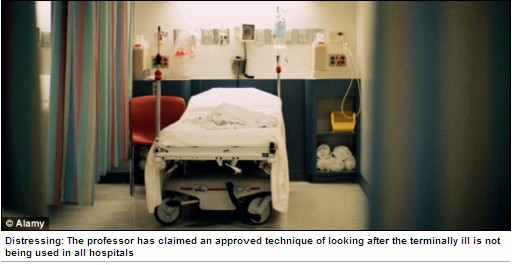
Worrying claim: Professor Patrick Pullicino said doctors had turned the use of a controversial 'death pathway' into the equivalent of euthanasia of the elderly
NHS doctors are prematurely ending
the lives of thousands of elderly hospital patients because they are difficult to manage or to free up beds, a
senior consultant claimed yesterday.
Professor Patrick Pullicino said
doctors had turned the use of a controversial ‘death pathway’ into the equivalent of euthanasia of the
elderly.
He claimed there was often a lack of
clear evidence for initiating the Liverpool Care Pathway, a method of looking after terminally ill patients that is
used in hospitals across the country.
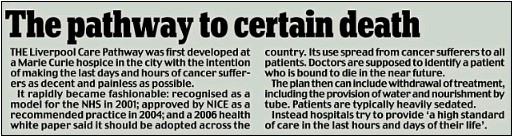
It is designed to come into force
when doctors believe it is impossible for a patient to recover and death is imminent.
It can include withdrawal of treatment – including the provision of water and nourishment by tube – and on average brings a patient to death in 33 hours.
There are around 450,000 deaths in
Britain each year of people who are in hospital or under NHS care. Around 29 per cent – 130,000 – are of patients
who were on the LCP.
Professor Pullicino claimed that far
too often elderly patients who could live longer are placed on the LCP and it had now become an ‘assisted death
pathway rather than a care pathway’.
He cited ‘pressure on beds and
difficulty with nursing confused or difficult-to-manage elderly patients’ as factors.
Professor Pullicino revealed he had personally intervened to take a patient off the LCP who went on to be successfully treated.
He said this showed that claims they had hours or days left are ‘palpably false’.
In the example he revealed a 71-year-old who was admitted to hospital suffering from pneumonia and epilepsy was put on the LCP by a covering doctor on a weekend shift.

Ethics Professor Says It’s “Quite Reasonable” to Kill Disabled Babies via Obamacare
Has anyone else noticed that most professors of ethics aren’t exactly…ummm…ethical? At least the ones who get quoted, anyway.
A professor at the highly esteemed Princeton University doesn’t want his Obamacare premiums to increase because of caring for severely disabled babies. Dr. Pete Singer, who teaches ethics (but perhaps needs a little refresher on what the word “ethics” means) argued during a radio interview on Sunday that America should be more accepting of “intentionally ending the lives of severely disabled infants.”
First, a definition:
Ethics: that branch of philosophy dealing with values relating to human conduct, with respect to the rightness and wrongness of certain actions and to the goodness and badness of the motives and ends of such actions.
Singer argued for the morality of “non-voluntary euthanasia” for human beings not capable of understanding the choice between life and death, including “severely disabled infants, and people who through accident, illness, or old age have permanently lost the capacity to understand the issue involved.”
For Singer, the wrongness of killing a human being is not based on the fact that the individual is alive and human. Instead, Singer argued it is “characteristics like rationality, autonomy, and self-consciousness that make a difference.” (source)
I think if you had a health-care system in which governments were trying to say, “Look, there are some things that don’t provide enough benefits given the costs of those treatments. And if we didn’t do them we would be able to do a lot more good for other people who have better prospects,” then yes.
I think it would be reasonable for governments to say, “This treatment is not going to be provided on the national health service if it’s a country with a national health service. Or in the United States on Medicare or Medicaid.”
And I think it will be reasonable for insurance companies also to say, “You know, we won’t insure you for this or we won’t insure you for this unless you are prepared to pay an extra premium, or perhaps they have a fund with lower premiums for people who don’t want to insure against that.”
Because I think most people, when they think about that, would say that’s quite reasonable. You know, I don’t want my health insurance premiums to be higher so that infants who can experience zero quality of life can have expensive treatments. (source)
Related "Ethics" Article:
Biotech Seeking Ways To Make People Suffer Eternally

LINK: Dead Fetus Cells in Pepsi and other Products
Short Film Looks Deeper Into The Euthanasia Debate
[VID]
A fictional story, 'The Unproductive' is a provocative look at effects of the euthanasia
debate on a relationship: how it can divide and devastate, as well as create a sense of helplessness at having to
make a life or death decision. The story also touches upon the ever-increasing competition between independent and
established news media; that is, the conflict this causes between two cousins whose perceptions of reality are
shaped by quite different news media sources. 'The Unproductive' was somewhat influenced by the Terri (Schindler)
Schiavo saga, which occurred in 2005.
http://theunproductivefilm.com/
- Brit doctors admit practicing ‘slow euthanasia’ on terminally-ill patients
- Elderly Woman Left to Die Under Britain’s Death Care System
- World’s first mobile euthanasia unit that will allow patients to die at home
- Report: Doctors Refusing to Treat Overweight Patients
- Doctors Now ‘Firing’ Patients Who Reject Vaccination
- Hospitals, doctors take ‘palm prints’ to ID patients
- Government recruits doctors to become thought police, pinpoint potential terrorists among their patients
- 35 Indian Patients Die from Swine Flu-like Infection
- New Edible Microchips to Alert Doctors, Mobile Phones if Patients Do Not Takes Meds
- British elderly to pay for “free” medical care
- Doctors issue warning over facial fillers
- Attack kills U.S., foreign doctors on medical mission in northern Afghanistan

Media Whores Promote Eugenics: Let’s
Start
Killing Grannies!
Neil Foster
Sovereign
Independent
Aug 2, 2010
The first line of the article below gives the reader the opinion the whole article sets out to ‘prove’ and that is that the planet is ‘overcrowded’.
http://www.irishtimes.com/newspaper/opinion/2010/0731/1224275910267.html
However, when you look at the facts, in other words how much space there is on our ‘overcrowded’ planet things suddenly appear very different. The article below goes through the whole overpopulation myth in simple terms to make it obvious that ‘overpopulation’ is an outrageous lie.
http://overpopulationisamyth.com/overpopulation-the-making-of-a-myth
For example, did you know that everyone on the planet could live in an area the size of Texas? Yep that’s right and it’s not a difficult arithmetical problem to solve. You simply divide the landmass by the amount of people on the planet.
Now I’m sure some will state quite rightly that not all the land in Texas for example is habitable but we should remember we’re only talking about Texas here. There is ample habitable land in other states or countries which could adequately cope with every person on Earth with enough space to not only have a sizable home but also enough space to grow their own healthy food.
This fact also destroys the myth that too many people will lead to a world food shortage. The only reason there will be a food shortage is if it’s artificially created. This process of artificial food scarcity is actually ongoing as more and more farmers are put out of business through government regulation or are being paid not to grow food.
The United Nations itself has said in their own documents that Africa could feed the world so why are Africans starving?
http://www.newscientist.com/article/mg20227143.100-africa-alone-could-feed-the-world.html
The truth is that the Irish Times is simply another rag pushing the myth of overpopulation to promote a eugenics agenda. In their intelligence insulting article they stigmatise the elderly as a drain on the finances of the state. I’m sure it won’t be too long before they start publishing articles on euthanasia. Watch this space! Newsweek’s been at it already.
http://www.newsweek.com/2009/09/11/the-case-for-killing-granny.html
The article also pushes the notion of China’s one child policy although in a remarkable blunder or example of double speak, they state that China’s population, despite a one child policy will increase by 10%. Now surely simple arithmetic shouldn’t be beyond the Times but apparently they can’t seem to work that a one child policy will ultimately lead to a 50% decrease in population but never mind, it’s in the Times so it must be true.
 They also suggest that Africans are to blame for the growing world population
despite famine and drought killing millions every year, not to mention the sterility brought about by covert
vaccination programs from the likes of Bill Gates and his
cronies who seem overly obsessed with sterilising people.
They also suggest that Africans are to blame for the growing world population
despite famine and drought killing millions every year, not to mention the sterility brought about by covert
vaccination programs from the likes of Bill Gates and his
cronies who seem overly obsessed with sterilising people.
I’ve posted the video below in a number of articles but will keep posting wherever it’s relevant because those who are hard of thinking or simply don’t understand the English language, he’s actually talking about sterilising people against their will and basically murdering people by poisoning them with his Rockefeller funded pharmaceuticals.
Keep that in mind when you buy Microsoft products because you’re funding this psychopathic lunatic in his sick project to kill people in the Third World. I guess they can’t afford his products so they’re just ‘useless eaters’ as fellow psychopath Henry Kissinger would call them.
People need to understand where all of this psychopathic lunacy comes from. Kissinger’s 1974 NSSM 200 document is a good start. You can read the full report here;
http://www.scribd.com/doc/7423676/NSSM-200-Kissinger-Genocide-Report-1974
Back to the Times. The Times is nothing more than a propaganda tool. It always has been for the elites as has every other newspaper and media outlet including Hollywood to push the agenda of whatever plans they have, in this case depopulation. This has and always will be the job of the media, the ‘media’ meaning the middle. They do not want you thinking outside the box so they keep you not thinking in the middle of any topic they give you to ‘think’ about already knowing that you’ll come to the conclusion they want you to.
This quote from David Rockefeller spells it out:
“We are grateful to the Washington Post, The New York Times, Time Magazine and other great publications whose directors have attended our meetings and respected their promises of discretion for almost forty years.”
“It would have been impossible for us to develop our plan for the world if we had been subjected to the lights of publicity during those years. But, the world is now more sophisticated and prepared to march towards a world government. The supranational sovereignty of an intellectual elite and world bankers is surely preferable to the national auto-determination practiced in past centuries.”
And you wonder why we have a banking crisis?
In the case of the Times article they know that the average reader will immediately come to the conclusion that we need to control the populations of the Thrid World and in particular Africa.
However, even although they admit that the West is dying, nowhere in the article is this deemed a problem and it’s even touted as a positive sign that the West is doing the right by basically commiting cultural suicide.
Of course, immigration is signaled as the great population problem facing the West thus further stigmatising foreigners who I’m sure in future articles in the Times will be accused of crime waves and ‘stealing’ the jobs of native peoples thus creating an enemy for the disenfranchised to target.
All segments of society must understand that all of them are being used in a massive chess game internationally being played out by the elite in a multifaceted divide aqnd conquer technique to destroy all of our societies by bring us all into conflict with a manufactured foe.
The real enemy however are the power elite themselves. We must stand together to confront
the beast and destroy it before it inevitable destroys human life as we know it. There are not too many people.
There are simply a few psychopaths playing us for fools.
LINK:

Episode 286 – Rockefeller Medicine
Posted by
Podcast: Play in new window | Download
As Americans fret about the Obamacare website and wonder how the country became enslaved to the highest healthcare costs in the world, we turn back the pages to look at how the modern medical paradigm came together in the early 20th century, courtesy of the Rockefeller Foundation and their cronies. Join us this week as we explore the real history of modern healthcare and the real motivations behind the family that brought it to you.
For those with limited bandwidth, CLICK HERE to download a smaller, lower file size version of this episode.
For those interested in audio quality, CLICK HERE for the highest-quality version of this episode (WARNING: very large download).
Documentation
| Rockefeller’s Medicine Men: Medicine and Capitalism in America | |
| Time Reference: | 00:35 |
| RATE SHOCK: Obamacare causing 539% increase in health insurance costs for Texans | |
| Time Reference: | 01:30 |
| Senator Baucus thanks Liz Fowler for her role in Obamacare | |
| Time Reference: | 03:20 |
| Senate Chairman has ties to big insurer | |
| Time Reference: | 05:03 |
| E.C. Mullins – The Rockefeller Drug Empire | |
| Time Reference: | 08:56 |
| The Last Word on Snake Oil | ||
| Time Reference: | 12:40 | |
| How Rockefeller University Shapes Science Career | |
| Time Reference: | 13:45 |
| Rockefeller Foundation played critical role in Chinese medical history | |
| Time Reference: | 16:24 |
| The Money Takeover of Medicine | |
| Time Reference: | 18:58 |
| E.C. Mullins – Murder by Injection | |
| Time Reference: | 27:41 |
| E.C. Mullins on Rockefeller Medicine | |
| Time Reference: | 28:25 |
| Episode 241 – The Truth About the Gene Revolution | |
| Time Reference: | 34:25 |
| Confronting David Rockefeller – Sunday Update | |
| Time Reference: | 36:17 |
| DECLASSIFIED: Population Reduction By Government. Vaccines. Forced Sterilization. | |
| Time Reference: | 37:36 |
| Rockefeller’s Double Game in GMO Foods and Depopulation | |
| Time Reference: | 38:19 |
| David Rockefeller speaks about population control | |
| Time Reference: | 38:54 |
| The White Stripes – Girl, You Have No Faith in Medicine – Live at Much Music | |
| Time Reference: | 43:22 |
Paul Krugman: Death Panels Will Be Necessary
Kurt Nimmo
Infowars.com
November 8, 2013
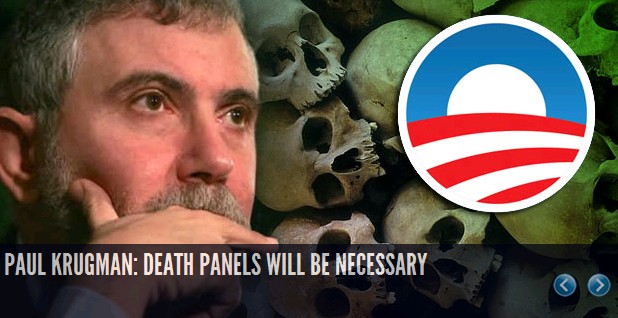
The Keynesian economist and New York Times columnist Paul Krugman said back in February that in order for the collectivist welfare state to run smoothly higher taxes and death panels will be mandatory.
Krugamn makes his death panel comment around 2 minutes and 20 seconds into the video.
Krugman made his comment at a time when the existence of death panels were steadfastly denied by Democrats and before Obamacare was brought to its knees by the pathological ineffectiveness of the state.
Sarah Palin and others were duly roasted for even suggesting that a communist-style system – where some individuals are sacrificed for the greater good of the collective – would comprise the essence of Obamacare.
In 2010, Media Matters for America, the propaganda mill devised by Democrat political operative and journalist David Brock with help from the establishment’s Center for American Progress (funded by the globalist George Soros), trashed a Washington Examiner column for daring to compare Obamacare to Sovietcare:
“The government will use the ‘science’ of comparative effectiveness research to achieve cost savings the only way government can: denial of care. The Soviet medical system kept down the heart disease caseload by placing cardiac care units on the fifth floor, walk up. Death panels, anyone?”
Democrats know Obamacare hinges on the existence of death panels. That’s the only way rationing will work, as it does in nature – weed out the weak and vulnerable.
On the other hand, it remains to be seen if Obamacare will in fact get off the ground. As it now stands, it appears the program will arrive stillborn due largely to the inability of government to deliver. It can’t even get it together to build a website for enrollees.
This article was posted: Friday, November 8, 2013 at 3:12 pm
Tags: domestic news, government corruption, healthcare

Halperin: Death Panels Built Into Obamacare
Democrats who said Sarah Palin is a lunatic and death panels don’t exist are uniformly silent
Kurt Nimmo
Infowars.com
November 25, 2013
Mark Halperin, a senior political analyst for Time magazine, told Newsmax TV that Democrats and the corporate media did not level with the public on death panels built into Obamacare.
DEATH PANEL DISCUSSION STARTS @ 08:08/12:53
Mark Halperin makes his remarks on death panels at 8 minutes into the video.
Halperin said the death panel concept is a cornerstone of Obamacare. “It’s built into the plan. It’s not like a guess or like a judgment. That’s going to be part of how costs are controlled,” Halperin told Steve Malzberg. Halperin makes his comments eight minutes into the above video.
Democrats have used the term “death panel” as a pejorative after the former Republican Governor of Alaska, Sarah Plain, used it in a debate on Obamacare in 2009.
Democrats and the corporate media boast they have “debunked” the claim and insist eugenics practices are not part of Obamacare. PolitiFact characterized the term as its “Lie of Year” in 2009 and FactCheck said it represents one of its “whoppers.”
Democrats and supporters of the Obamacare fiasco have fought a running battle since the Keynesian economist and New York Times columnist Paul Krugman said in February that in order for the collectivist welfare state to run smoothly higher taxes and death panels will be mandatory.
“Eventually we do have a problem. That the population is getting older, health care costs are rising,” Krugman said, admitting that “there is this question of how we’re going to pay for the programs… So the snarky version… which I shouldn’t even say because it will get me in trouble, is death panels and sales taxes is how we do this.”
This article was posted: Monday, November 25, 2013 at 6:29 pm

Just don’t call them
death panels
Thomas Lifson
americanthinker.com
January 24, 2014
When the government is in charge of health care, rationing happens, and some people are handed death sentences. The ObamaCare Left would prefer that this reality remain hidden for as long as possible, submerged in a warm bath of “healthcare for everyone” sentiment, but Sarah Palin eloquently summed up the actuality with the expression “death panels.”
Here is how it works in the Mother of All Nationalized Healthcare Systems. From Jenny Hope of the UK Daily Mail:
Pensioners with cancer are being written off as too old to treat, campaigners said yesterday.
They cited figures showing survival rates for British patients aged 75 and over are among the worst in Europe.
Young lung cancer sufferers are only 10 per cent more likely to die within five years than their continental counterparts.
This article was posted: Friday, January 24, 2014 at 10:46 am
The EPA Wants to Kill Your Grandma
[VID]
Published on Jan 22, 2015
The EPA is testing dangerous cancer causing substances on the elderly and children. They are writing draconian policies to curb natural human off the grid activity in an effort to push people off their land and into compact cities. Infowars reporter Rob Dew lays out a mountain of evidence that proves the EPA is out to kill your grandma.
LINKS:
AGENDA 21 | Religious Leaders Politicians Sellout to Rockefeller Foundation | Climategate Is Still the Issue |
Climate Change | Climate Change Hate Crimes | Lord C. Monckton Lecture | AGENDA 21 Cliven Bundy Case Example
Obamacare Architect Says Society Would Be Better Off If People Only Lived To Age 75
Dr. Ezekiel Emanuel, brother of Rahm Emanuel, says that society would be far better off if people quit trying to live past age 75
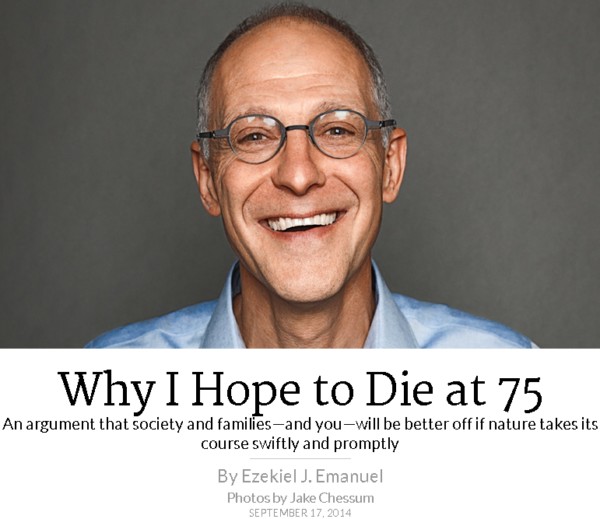
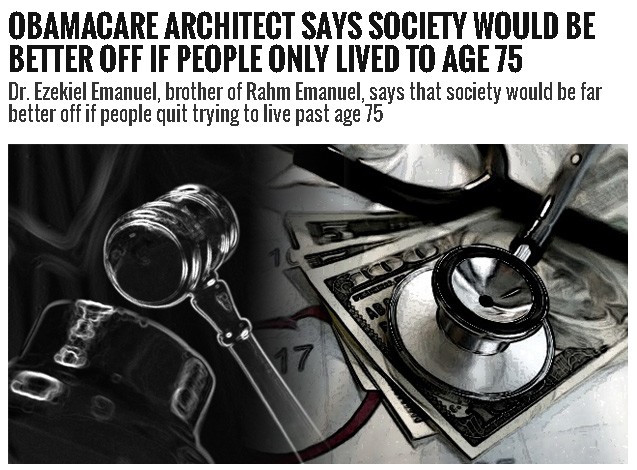
Dr. Ezekiel Emanuel, brother of Rahm Emanuel, says that society would be far better off if people quit trying to live past age 75. His new article entitled “Why I Hope To Die At 75” has the following very creepy subtitle: “An argument that society and families—and you—will be better off if nature takes its course swiftly and promptly”. In the article, Emanuel forcefully argues that the quality of life for most people is significantly diminished past the age of 75 and that once we get to that age we should refuse any more medical care that will extend our lifespans. This is quite chilling to read, considering the fact that this is coming from one of the key architects of Obamacare. Of course he never uses the term “death panels” in his article, but that is obviously what Emanuel would want in a perfect world. To Emanuel, it is inefficient to waste medical resources on those that do not have a high “quality of life”. So he says that “75 is a pretty good age to aim to stop”.
Emanuel believes in this philosophy so much that he says that he would like to die at age 75. Of course he has no intention of committing suicide, but if he happened to drop dead once he hits his 75th birthday he would be very happy about that. The following is an excerpt from his new article…
I am talking about how long I want to live and the kind and amount of health care I will consent to after 75. Americans seem to be obsessed with exercising, doing mental puzzles, consuming various juice and protein concoctions, sticking to strict diets, and popping vitamins and supplements, all in a valiant effort to cheat death and prolong life as long as possible. This has become so pervasive that it now defines a cultural type: what I call the American immortal.
I reject this aspiration. I think this manic desperation to endlessly extend life is misguided and potentially destructive. For many reasons, 75 is a pretty good age to aim to stop.
And so Emanuel plans to start rejecting pretty much all medical tests and treatments that will prolong his life once he reaches that age…
At 75 and beyond, I will need a good reason to even visit the doctor and take any medical test or treatment, no matter how routine and painless. And that good reason is not “It will prolong your life.” I will stop getting any regular preventive tests, screenings, or interventions. I will accept only palliative—not curative—treatments if I am suffering pain or other disability.
This means colonoscopies and other cancer-screening tests are out—and before 75. If I were diagnosed with cancer now, at 57, I would probably be treated, unless the prognosis was very poor. But 65 will be my last colonoscopy. No screening for prostate cancer at any age. (When a urologist gave me a PSA test even after I said I wasn’t interested and called me with the results, I hung up before he could tell me. He ordered the test for himself, I told him, not for me.) After 75, if I develop cancer, I will refuse treatment. Similarly, no cardiac stress test. No pacemaker and certainly no implantable defibrillator. No heart-valve replacement or bypass surgery. If I develop emphysema or some similar disease that involves frequent exacerbations that would, normally, land me in the hospital, I will accept treatment to ameliorate the discomfort caused by the feeling of suffocation, but will refuse to be hauled off.
A couple of decades ago, an article like this would have sparked mass public outrage.
But today, this article hardly even gets any attention.
That is because this kind of philosophy has spread everywhere. It is being taught at colleges and universities across the United States and it is even represented throughout the ranks of the Obama administration.
For example, Barack Obama’s top science adviser John P. Holdren believes that implanting sterilization capsules under the skin of women could be a way to reduce the size of the population and increase the quality of life for everyone…
A program of sterilizing women after their second or third child, despite the relatively greater difficulty of the operation than vasectomy, might be easier to implement than trying to sterilize men.
The development of a long-term sterilizing capsule that could be implanted under the skin and removed when pregnancy is desired opens additional possibilities for coercive fertility control. The capsule could be implanted at puberty and might be removable, with official permission, for a limited number of births.
Yes, this guy is a total nutjob.
But he also has the ear of the man occupying the White House.
And we are not just talking about a few isolated crazies like Holdren. This agenda have been fully embraced by our politicians in Washington.
For instance, did you know that the federal government actually has an “Office of Population Affairs“?
On the website of the Office of Population Affairs, you can find information about abortion, female sterilization, male sterilization and a vast array of contraceptive choices.
U.S. taxpayers are paying for all of this, but most people don’t even know that it exists.
Of course this agenda has been moved forward by both Democrats and Republicans for decades.
And the woman that is very likely to be our next president is also a very strong proponent of this philosophy.
When Hillary Clinton accepted Planned Parenthood’s Margaret Sanger Award back in 2009, she spoke glowingly of Sanger…
In a speech to the Planned Parenthood Federation of America Awards Gala, US Secretary of State Hillary Clinton said that she admires “Margaret Sanger enormously, her courage, her tenacity, her vision.” Secretary Clinton said she is “really in awe of” Sanger for Sanger’s early work in Brooklyn, New York, “taking on archetypes, taking on attitudes and accusations flowing from all directions.”
But the truth is that Sanger was deeply racist and was determined to do whatever she could to help control the population growth of the poor. The following is one of her most famous statements…
“The most merciful thing that the large family does to one of its infant members is to kill it.”
Hillary Clinton is also a huge supporter of the United Nations Population Fund. If you are not familiar with the United Nations Population Fund, it is an organization that funds abortion, forced sterilization and brutal eugenics programs throughout the developing world.
Population control advocates such as Emanuel, Holdren and Clinton are fully convinced that they are doing the right thing.
They actually believe that the world will be a better place if less people are born and if the elderly do not live as long.
So what do you think? Please share your thoughts…
why one prominent doctors says i hope to die at 75
http://www.theatlantic.com/features/archive/2014/09/why-i-hope-to-die-at-75/379329/
LINK:

REACH OUT TO OTHERS
[Help Educate Family And Friends With This Page And The Links Below]
RELATED:
Health Care | Why doctors are more dangerous than guns | DEATH BY PHARMACEUTICALS | N.W.O. |
Depopulation Agenda | Depopulating The Third World! | Soft Kill Depopulation Prgm. | Road to World Government |
Full Spectrum Dominance | If I were the devil | Keep Healthy To Fight | Eugenicist Bill Gates